Wired Audio Systems: A Beginner's Guide to Design and Troubleshooting
A wired audio system is a sound distribution solution for large, complex spaces. At its heart is a technology that can carry audio over long distances and efficiently connect large numbers of loudspeakers.
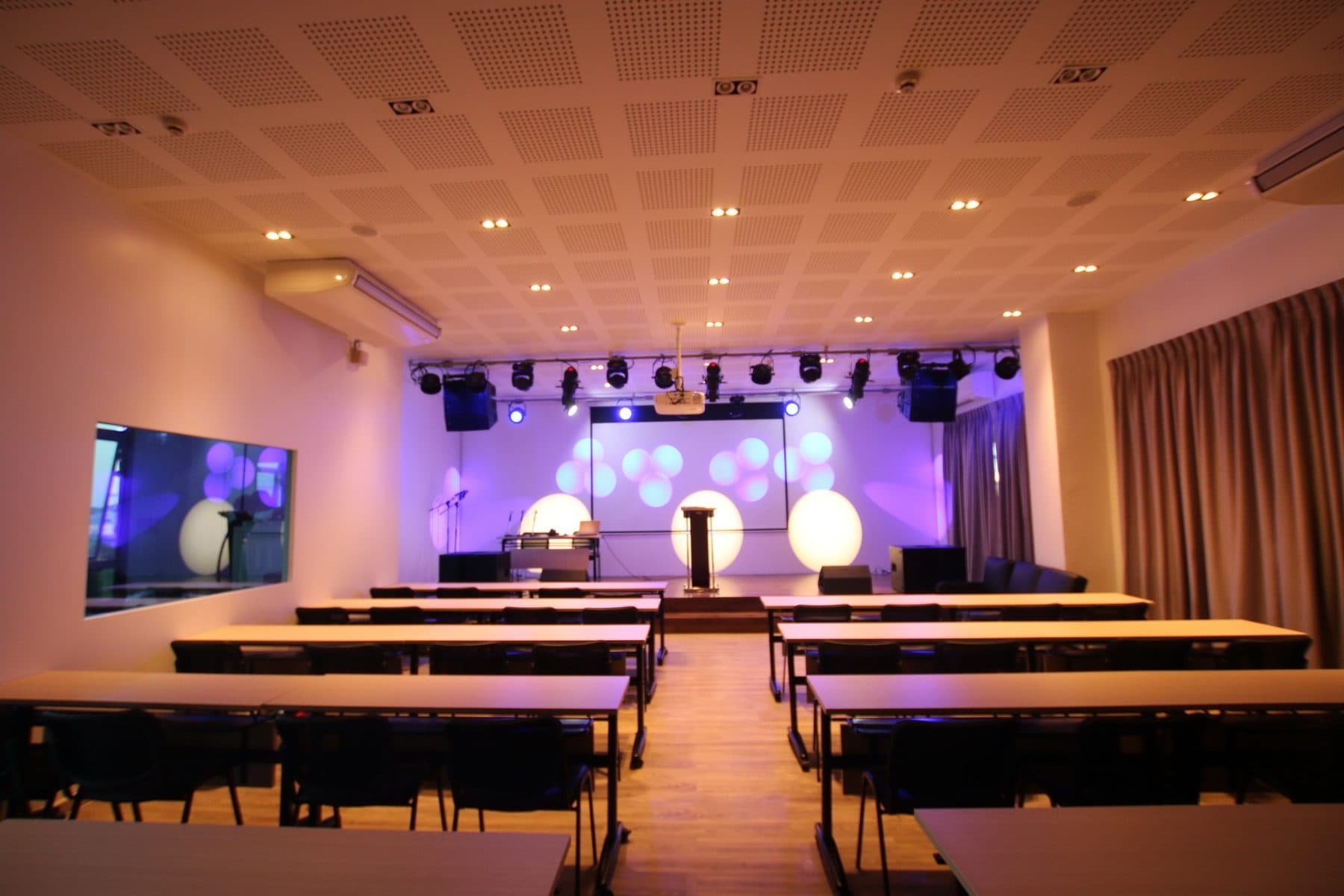
A wired audio system is a sound distribution solution for large, complex spaces such as office buildings, schools, factories, or shopping centers. Its primary goal is clear communication — whether making announcements, playing background music (BGM), or issuing emergency alerts. At its heart is a technology that can carry audio over long distances and efficiently connect large numbers of loudspeakers.
Common Audio Problems (and How a Wired Audio System Solves Them)
From direct experience, we find that audio problems in large buildings usually stem from a misunderstanding in the choice of system. The classic problem is that sound at points far from the control room becomes very faint, or that attempting to add more loudspeakers damages the amplifier. A wired audio system is designed specifically to solve this, using Constant Voltage technology (70V/100V) to keep the audio signal level constant across cable runs hundreds of meters long, and allowing loudspeakers to be added to the system easily — as long as the total wattage does not exceed the capacity of the amplifier.
A Closer Look at the Technique Behind It: Why Is the Volt Line So Important?
Imagine pumping water through a pipe. If you use a small pipe (ordinary loudspeaker cable) to send water a long way, the water pressure (audio signal) gradually drops. But a Volt Line system is like using a large, high-pressure main pipe (a 100V signal cable) and then placing a pressure-reducing valve (a transformer at the loudspeaker) at each endpoint. This way, every point receives the same steady "water pressure." This is why a wired audio system can deliver equally loud, clear sound throughout an entire building.
System Diagram: From Microphone to Loudspeaker
Every wired audio system shares a similar basic structure, divided into three main parts: the input stage, which receives the incoming audio signal — this might be a microphone, a music player, or a signal from an alarm system; the control and processing stage, which is the brain of the system, comprising a mixer or preamplifier that combines signals, adjusts levels, and divides zones; and the amplification and output stage, where the power amplifier sends the signal over cable to the loudspeakers.
When DIY Is Not the Answer: The Role of the Professional Installer
Designing and installing a wired audio system requires specialized knowledge and expertise, including wattage-load calculation, correct cable-gauge selection, and compliance with safety regulations. Using a professional installer therefore ensures a system that operates at full efficiency and safely.
Frequently asked questions
Why is the sound faint at points far from the control room, and how is it fixed?
This is the classic problem in large buildings. A wired audio system solves it with Constant Voltage technology (70V/100V), which keeps the audio signal level constant across cable runs hundreds of meters long — like using a high-pressure main pipe with a pressure-reducing valve (a transformer) at each loudspeaker, so every point receives the same steady signal.
Can more loudspeakers be added to a wired audio system?
Yes, easily — as long as the total wattage of all the loudspeakers does not exceed the capacity of the amplifier. This is a key advantage of a Constant Voltage system over conventional wiring, where adding loudspeakers can damage the amplifier.
What does a wired audio system consist of?
Three main parts: the input stage, which receives the incoming audio — a microphone, a music player, or a signal from an alarm system; the control and processing stage, the brain of the system, comprising a mixer or preamplifier that combines signals, adjusts levels, and divides zones; and the amplification and output stage, where the power amplifier sends the signal over cable to the loudspeakers.