A Guide to Meeting Room Speaker Installation: Turn an Ordinary Room into a Professional Communication Space
Unclear sound in a meeting room destroys productivity. The key lies in installing speakers correctly and effectively.
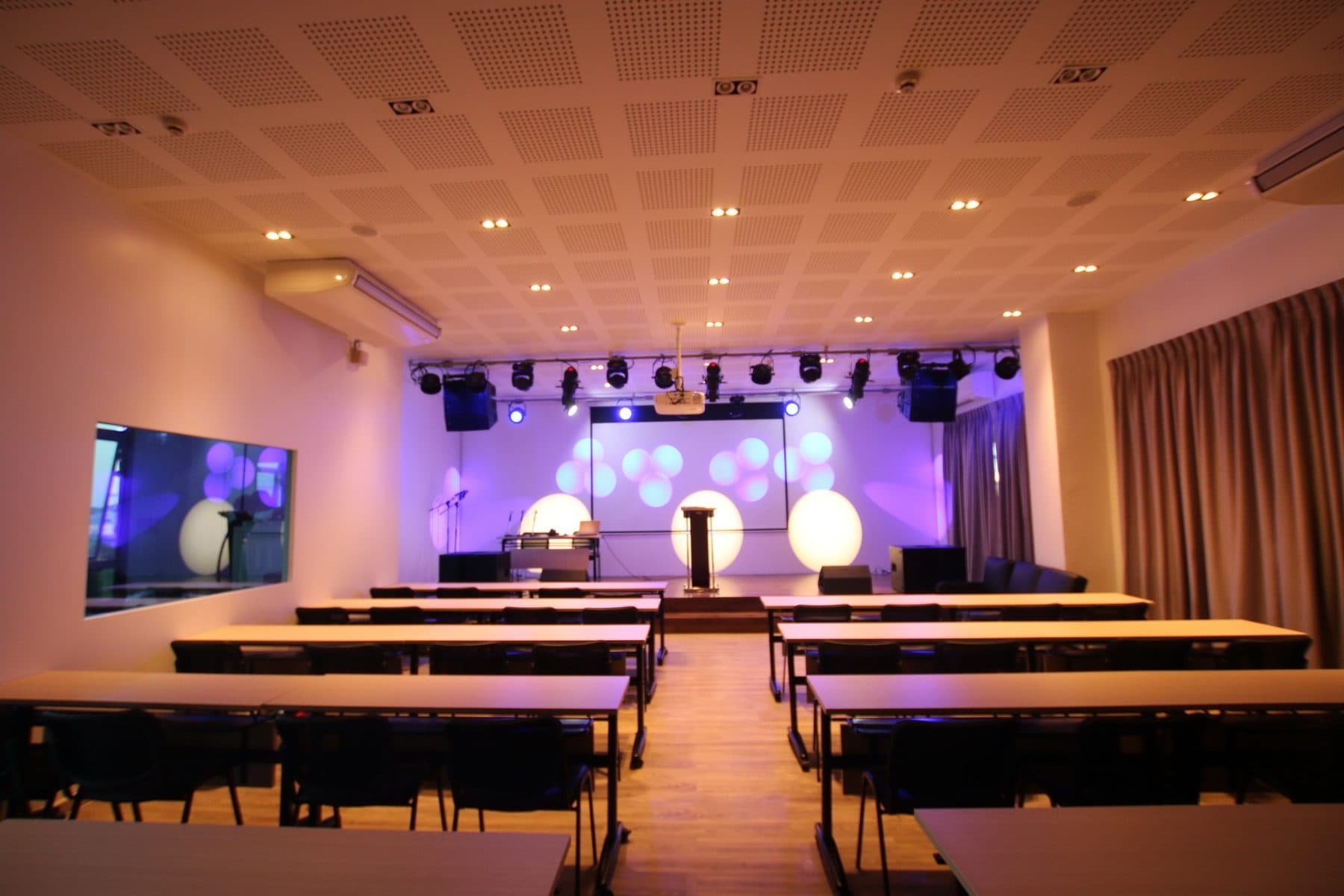
Unclear sound in a meeting room is the most insidious destroyer of productivity. Having good speakers alone is not enough; the key lies in installing meeting room speakers correctly and effectively.
The goals of a good meeting room speaker installation
Professional speaker installation does not aim merely to "be loud." It aims for clarity, so speech is crisp and easy to understand; coverage, so every position in the room hears sound at a similar level; aesthetics, blending in with the interior decor; and reliability, so the system is stable and always ready to use.
Phase 1: Planning and design before installation begins
The planning stage is the most important step, laying the foundation for the success of the entire project. Most meeting rooms have smooth, hard walls that easily create echo. A preliminary acoustic assessment helps in planning the type and placement of speakers to reduce the impact of reflections.
Positioning speakers for maximum coverage
The key principle is to position speakers so they distribute sound directly to listeners as much as possible, with the fewest obstructions. For ceiling speakers, calculating the appropriate spacing helps the sound "overlap" just right and cover the entire room.
Connecting to the amplifier and mixer
Connecting speakers to the amplifier requires attention to impedance (ohms) and correct phase, so that all speakers reinforce one another rather than cancel each other out, a technical detail that requires genuine knowledge and understanding.
Calibration & Tuning
This step uses sound measurement tools (such as an RTA) and software on the processor (DSP) to adjust the equalizer, crossover, and delay of each speaker to suit the room's acoustics, a step that makes an enormous difference in sound quality.
Frequently asked questions
What should a good meeting room speaker installation achieve?
It does not aim merely to be loud. It aims for clarity, so speech is crisp and easy to understand; coverage, so every position in the room hears sound at a similar level; aesthetics, blending in with the interior; and reliability, so the system is stable and always ready to use.
How do you deal with echo in a meeting room?
Most meeting rooms have smooth, hard walls that easily create echo. A preliminary acoustic assessment at the planning stage helps in choosing the type and placement of speakers to reduce the impact of reflections — which is why planning is the most important step.
Is tuning necessary after installation?
Yes. Calibration and tuning uses measurement tools such as an RTA and software on the processor (DSP) to adjust the equalizer, crossover, and delay of each speaker to suit the room's acoustics — a step that makes an enormous difference in sound quality.