Government AV Procurement: Writing the TOR and BOQ
The government path to procuring an audio-visual system: the budget request, a brand-neutral TOR, the BOQ, the e-GP steps, bidder qualification, acceptance and user training.
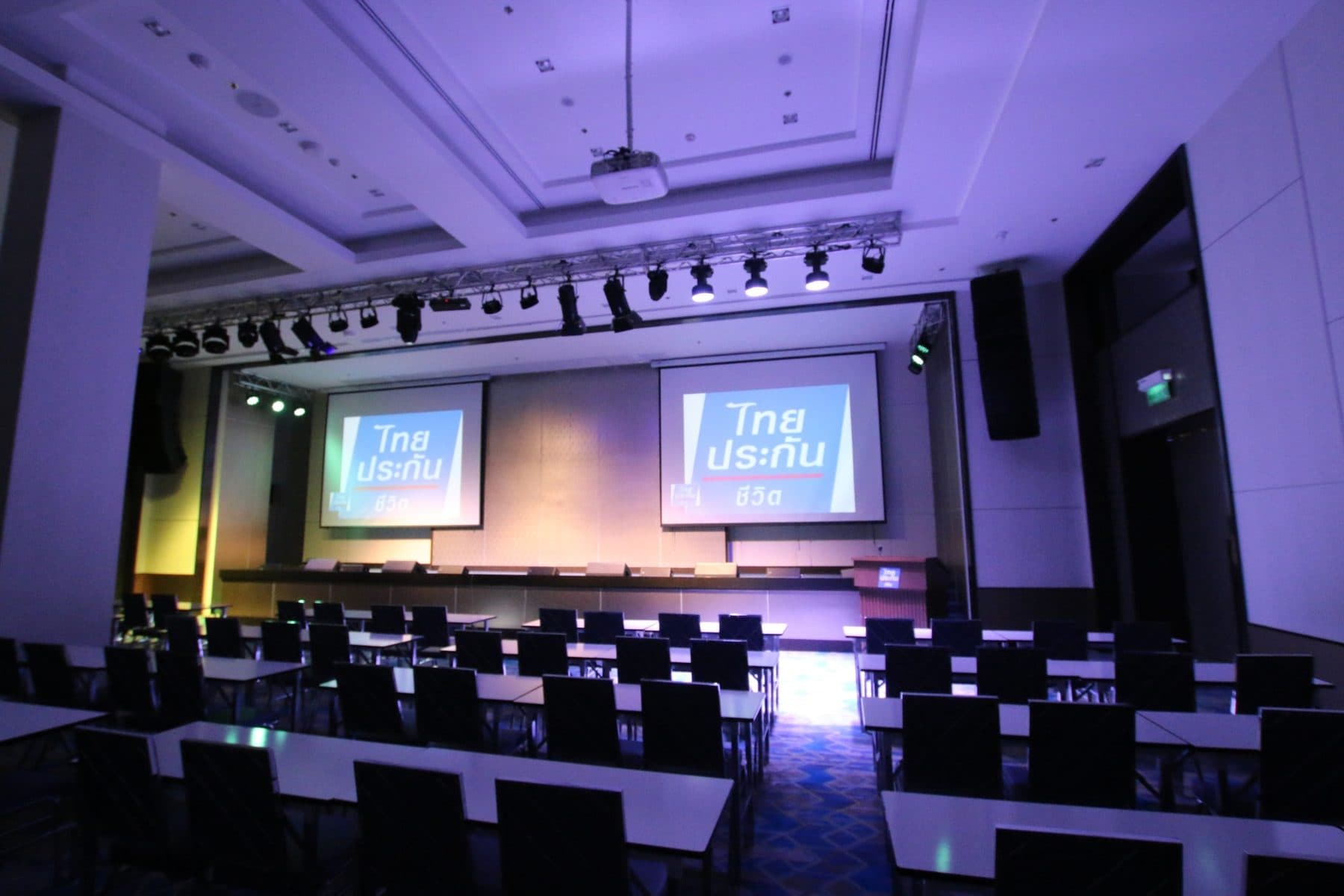
For a government agency, procuring an audio-visual system that passes acceptance without dispute starts with a Terms of Reference (TOR) that states what the meeting room or auditorium must be able to do, broken down into a Bill of Quantities (BOQ) that leaves nothing out, before the package enters the public procurement process through the e-GP system. This article follows the procurement officer's path: the budget request, writing a TOR without locking in a brand, preparing the BOQ, bidder qualifications, and finally acceptance and training. Audio-visual equipment types and general asset management are already covered in our article A Guide to Procuring and Managing Audiovisual Equipment for the Modern Organization.
What do you need before requesting the budget?
The first thing you need is a measurable list of requirements, not a budget figure pulled from the air. Start by surveying the actual spaces: how large each meeting room is and how many seats it holds, what the auditorium is used for, whether you hold video conferences with other agencies, and the state of the existing system, cabling, power and room acoustics. This information is the foundation of a defensible reference price that can be explained line by line. In order:
- Identify the spaces, the number of rooms and the users.
- Define what the system must do in each room.
- Identify existing systems to be connected or removed.
- Have someone experienced survey the site and produce a preliminary estimate before the budget is set. At this stage VAN INTERTRADE provides consultation and a site survey free of charge, so the agency has an estimate grounded in the real space before the budget request goes in. How the spend is classified and how the reference price is prepared should always be checked against the applicable regulations.
How do you write an audio-visual TOR without locking in a brand?
The principle is to specify by function and performance, not by brand or model. A good TOR says that speech must be clearly intelligible at every seat, at a similar level throughout the room and without feedback; that text on the screen must be readable from the back row; that there are computer inputs at the chair's desk and at the podium; that control is consolidated in one place; that the room supports video conferencing; and that meeting audio can be recorded. Where technical figures are needed, such as amplifier power or image resolution, state them as minimums with a rationale that traces back to the room size and its use. What to avoid is copying one product's catalogue sheet as the whole specification: it invites a complaint of brand lock-in and leaves you with fewer bidders. If a product name is needed, add the words 'or equivalent' with verifiable equivalence criteria. The TOR should cover the full scope of work: design, supply, installation, cabling, testing, tuning, training, documentation handover, and the warranty terms. VAN INTERTRADE can help prepare supporting draft information for the agency's TOR and specification from a real site survey; the agency's committee always makes the final determination, and the agency should check the applicable specification guidance and the rules on interested parties and bidder eligibility.
What line items should an audio-visual BOQ contain?
The BOQ turns the TOR into a table that can be counted. Every line needs a number, description, unit, quantity, unit price and total, grouped as follows:
- Audio: microphones, mixer, processor, amplifiers and speakers.
- Video: displays or projectors, screens, switchers and cameras.
- Control and video conferencing.
- Equipment rack, power for the equipment, and UPS.
- Signal cabling, conduit, cable tray and mounting hardware.
- Installation labour.
- Testing and tuning.
- Training and handover documentation.
- Spare parts and consumables. The common mistakes are leaving out the cabling lines so the on-site cost balloons, quantities that do not match the TOR, and units that are too coarse, such as counting the whole room as one system, which leaves the acceptance committee unable to count anything. A sufficiently detailed BOQ makes the offers comparable on fair terms and serves directly as the reference document at acceptance. VAN INTERTRADE helps prepare the BOQ to match the TOR and the design drawings, so every line has a source and can actually be counted.
What are the e-GP steps when a government agency procures an audio-visual system?
In general, a government agency's audio-visual procurement through e-GP runs as follows:
- Prepare and publish the procurement plan.
- Appoint the committee that drafts the scope of work and the reference price.
- Publish the draft announcement for comment, as the chosen method requires.
- Publish the invitation; vendors registered on e-GP download the documents and submit offers through the system.
- The committee checks qualifications, technical offers and prices.
- Announce the winner and wait out the appeal period.
- Sign the contract and hand over the site. The method used, whether electronic bidding, selection or specific method, depends on the value and circumstances of each case; check the regulations in force at the time. What keeps the process smooth is a TOR and BOQ that answer bidders' questions in advance, such as room drawings and site access conditions. VAN INTERTRADE is a registered e-GP vendor and can submit offers through the system according to the agency's procedure.
How should bidder qualifications and past-work certificates be set?
The qualifications worth setting are the ones that select bidders who can actually do this work, without restricting competition: a legal entity registered on e-GP; past work of the same kind, meaning audio-visual systems for meeting rooms or auditoriums rather than general electrical work; a technical team that will actually install and tune the system; and after-sales service that can reach the agency's location. A past-work certificate is a document issued by the previous client naming the project, its scope, its value and its completion. The committee should read the scope first, and the minimum past-work value for each government audio-visual procurement should be checked against the applicable regulations. VAN INTERTRADE was founded in 1986, has 40 years of experience and more than 100 projects nationwide, and has past-work certificates available for use in a bid submission. Its government work includes meeting rooms for the Ministry of Interior, the Defence Council, the Revenue Department, the provincial halls of Chai Nat, Chaiyaphum, Narathiwat, Phayao, Sukhothai and Ang Thong, the Sukhothai Provincial Administrative Organisation, and the 1,000-seat auditorium at the Suphan Buri Provincial Government Centre.
What should acceptance and user training cover?
Good acceptance is done in two layers. The first is a line-by-line count against the BOQ: model, quantity and serial number. The second is a functional test against what the TOR requires, with the people who will actually use the room taking part: speak through every microphone and walk the room listening from every corner, bring up an image from every input on every display, run a video conference with a real far end, and record audio and play it back. Check the quality of the installation work: cable management in the rack, earthing, and the security of speaker and display mounts. Handover documents must be complete: as-built drawings, manuals, the warranty documents required by the contract, and the spare-parts list. Training should be given to the staff who actually look after the room and cover start-up and shut-down, operation for each meeting format, and basic troubleshooting, with an attendance record kept for acceptance. VAN INTERTRADE's process runs in order: consultation, site survey, design, installation, training and after-sales service, with installation and service nationwide.
Frequently asked questions
Can the TOR name a brand or model?
Specify primarily by function and minimum performance. If a product name is needed to convey a quality level, add 'or equivalent' with verifiable equivalence criteria, and check the applicable specification guidance.
What is the difference between the TOR and the BOQ?
The TOR describes what the system must do and what the scope of work covers; the BOQ turns those requirements into a countable table of items, units, quantities and prices. The two must agree, because the BOQ is the reference document for the count at acceptance.
What is a past-work certificate and how should it be assessed?
It is a document issued by a previous client to the contractor, naming the project, its scope, its value and its completion. The committee should focus on whether the scope is audio-visual work of the same kind, and check the applicable regulations for the minimum reference value.
How can an agency request technical information from vendors to help draft the TOR and BOQ?
An agency can request technical information from vendors to inform its planning, for example from a real site survey, but the agency's committee always makes the final determination of the TOR. The agency should check the rules on interested parties and bidder eligibility. VAN INTERTRADE can help prepare supporting draft information from a real site survey.
What should acceptance testing of an audio-visual system cover?
Count line by line against the BOQ, then test real operation against the TOR: speech clarity at every seat, images on every display from every input, a video conference with a real far end, and audio recording, plus the quality of the installation, the handover documents, and training with an attendance record.
What government projects has VAN INTERTRADE completed?
Meeting rooms for the Ministry of Interior, the Defence Council, the Revenue Department, the provincial halls of Chai Nat, Chaiyaphum, Narathiwat, Phayao, Sukhothai and Ang Thong, the Sukhothai Provincial Administrative Organisation, and the 1,000-seat auditorium at the Suphan Buri Provincial Government Centre; it is a registered e-GP vendor and has past-work certificates available for use in a bid submission.